

Pinched Nerve vs. Muscle Spasm: When to See a Jersey City Physical Therapist
A pinched nerve occurs when pressure is applied to a nerve, often causing sharp, radiating pain, numbness, or tingling. In contrast, a muscle spasm involves an involuntary muscle contraction, leading to localized pain and stiffness. While both conditions can cause discomfort, a pinched nerve typically affects specific areas along the nerve path, whereas muscle spasms are more localized to the muscle itself. Dr. David Sylvester, DC, and the team at Harborside Sport & Spine specialize in diagnosing and treating both conditions, helping you find relief through personalized care. For more information, contact us or schedule an appointment online. We are conveniently located at 75 Montgomery Street, Suite 603 Jersey City, NJ 07302.
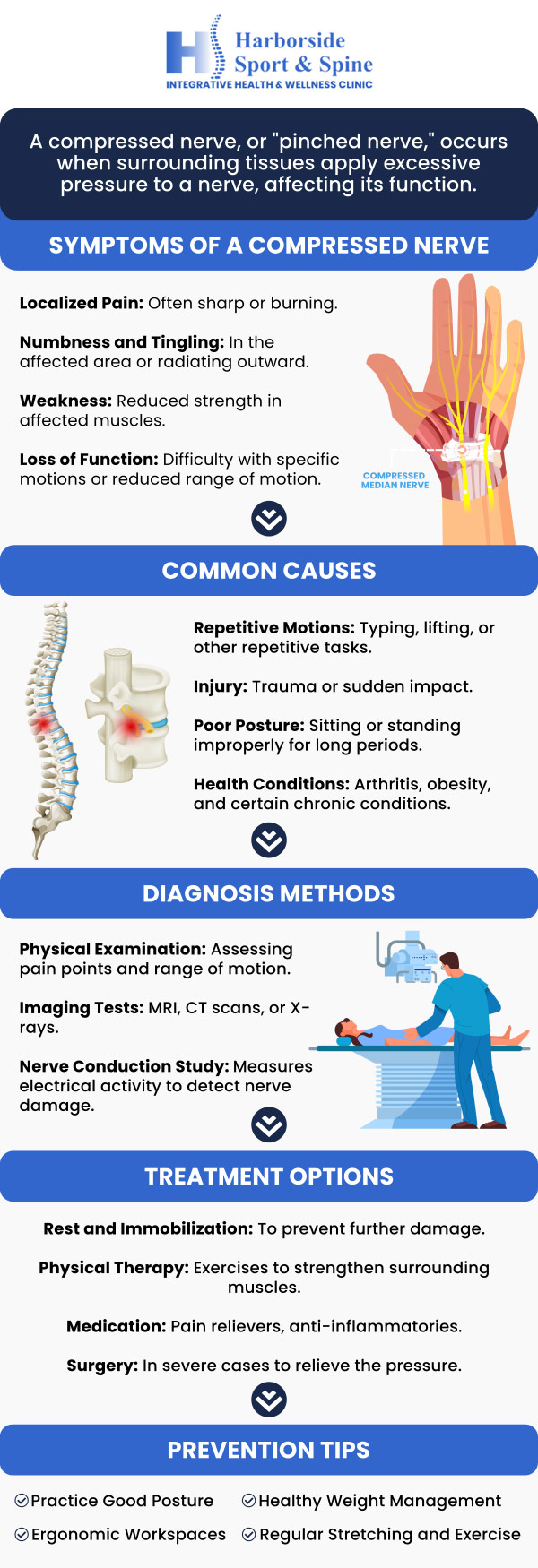
Table of Contents:
What is a pinched nerve, and how does it differ from a muscle spasm?
What symptoms indicate a pinched nerve?
How can I tell if my pain is nerve‑related or muscular?
When should I see a physical therapist for a pinched nerve or muscle spasm?
Find Relief from Pinched Nerves with Dr. David Sylvester, DC, and Team at Harborside Sport & Spine
A pinched nerve occurs when pressure is applied to a nerve by surrounding tissues, such as bones, cartilage, muscles, or tendons. This pressure can cause the nerve to become irritated, inflamed, or damaged. Common causes of a pinched nerve include herniated discs, bone spurs, or repetitive stress on the spine or limbs. A pinched nerve often leads to symptoms such as pain, numbness, tingling, and weakness along the path of the nerve.
On the other hand, a muscle spasm is an involuntary contraction of a muscle or group of muscles, which can lead to tightness, pain, and limited movement. Unlike a pinched nerve, a muscle spasm doesn’t involve the compression or irritation of a nerve. Muscle spasms are typically caused by muscle overuse, dehydration, poor posture, or an imbalance in muscle strength. While both conditions cause pain, muscle spasms are usually more localized to the muscle, whereas pinched nerves can cause radiating pain that extends to other areas of the body.
Understanding the difference between a pinched nerve and a muscle spasm is crucial for determining the appropriate treatment. At Harborside Sport & Spine, Dr. David Sylvester, DC, and the team assess each patient’s condition carefully to provide the most effective care for nerve-related or muscular issues. Whether it’s a pinched nerve or a muscle spasm, personalized treatment plans are designed to address the underlying cause of pain, reduce inflammation, and improve mobility.
The symptoms of a pinched nerve can vary depending on the location and severity of the nerve compression. Common signs include:
● Pain: A pinched nerve often causes sharp, burning, or shooting pain that can radiate from the affected area to other parts of the body. For example, a pinched nerve in the neck may radiate pain down the arm.
● Numbness and Tingling: You may experience numbness or a “pins and needles” sensation in the areas served by the affected nerve, such as the arms, legs, or hands.
● Weakness: A pinched nerve can lead to muscle weakness, especially in the areas that the nerve controls. For example, you may notice difficulty gripping objects or weakness in your legs when walking.
● Reduced Range of Motion: If the pinched nerve is located in the neck or back, you may have difficulty moving your head, neck, or spine without experiencing pain or discomfort.
● Worsening Symptoms with Certain Movements: Symptoms of a pinched nerve may worsen when you perform activities like bending, lifting, or turning your head.
If you experience any of these symptoms, it’s important to consult a healthcare professional for proper evaluation and diagnosis. Dr. David Sylvester, DC, and the team at Harborside Sport & Spine offer comprehensive assessments and individualized treatment plans to help relieve the pain and discomfort caused by a pinched nerve.
Determining whether your pain is nerve-related or muscular involves assessing the type, location, and nature of the pain. Here are some key indicators that can help differentiate the two:
● Nerve Pain: Nerve-related pain is often sharp, burning, or shooting, and it can radiate along the path of the nerve. This type of pain typically extends from the affected area (such as the neck, back, or arms) and may travel down the limbs. Numbness, tingling, and weakness are common accompanying symptoms of nerve pain.
● Muscle Pain: Muscular pain is often more localized and feels like a dull ache or stiffness. It can be triggered by overuse, tension, or injury to the muscles, and the pain is generally confined to the area of muscle involvement. Muscle spasms may cause sudden, intense pain that can be relieved by stretching or massaging the affected area.
● Movement and Posture: If your pain worsens with certain movements or positions, it can give a clue about its origin. For example, nerve pain may worsen with neck or back movements, while muscle pain may be triggered by certain postures or overexertion.
● Response to Treatment: Nerve-related pain may not respond to typical muscle treatments like rest or stretching. Instead, it may require specialized therapies such as chiropractic adjustments or physical therapy.
If you’re unsure whether your pain is nerve-related or muscular, seeking professional guidance is essential. Dr. David Sylvester, DC, and the team at Harborside Sport & Spine use advanced diagnostic tools to accurately determine the cause of your pain and provide an effective treatment plan tailored to your needs.
It’s important to seek professional care when dealing with a pinched nerve or muscle spasm, especially if the pain is persistent, severe, or affecting your daily activities. Here are some signs that indicate it’s time to see a physical therapist:
● Chronic or Worsening Pain: If your pain has lasted for more than a few days and isn’t improving with at-home treatments like rest or ice, it’s time to consult a physical therapist. Chronic pain may indicate an underlying issue that requires professional intervention.
● Pain Radiating to Other Areas: If your pain is radiating to other parts of your body, such as your arms, legs, or feet, it could be a sign of a pinched nerve. A physical therapist can help determine if the pain is due to nerve compression and develop a personalized treatment plan.
● Limited Mobility: If you’re experiencing difficulty moving certain body parts or performing everyday activities due to pain, a physical therapist can help restore mobility through targeted exercises and treatments.
● Weakness or Numbness: If you notice muscle weakness, numbness, or tingling sensations, it’s important to see a physical therapist as these symptoms may indicate nerve involvement. They can help address the underlying issues and prevent further complications.
● Not Improving with Home Remedies: If at-home treatments such as rest, ice, or over-the-counter medications aren’t helping, it’s a sign that professional care is needed. Physical therapists can offer treatments like manual therapy, stretches, and exercises that address both muscle and nerve issues.
Dr. David Sylvester, DC, and the team at Harborside Sport & Spine work closely with physical therapists to develop comprehensive treatment plans for patients experiencing pinched nerves or muscle spasms. Their goal is to alleviate pain, restore mobility, and prevent future injuries.
If you’re experiencing the sharp, radiating pain, tingling, or numbness associated with a pinched nerve, Dr. David Sylvester, DC, and the team at Harborside Sport & Spine are here to help. With years of experience in treating nerve compression and related conditions, Dr. Sylvester offers personalized treatment plans designed to relieve pain, reduce inflammation, and restore optimal nerve function. Whether caused by a herniated disc, muscle strain, or other spinal issues, the team at Harborside Sport & Spine uses advanced diagnostic tools and non-invasive therapies to address the root cause of your pain and get you back to feeling your best. At Harborside Sport & Spine, our goal is to provide long-term relief from pinched nerves. Dr. Sylvester and his team take a holistic approach, combining chiropractic adjustments, physical therapy, and lifestyle recommendations to ensure your recovery is thorough and sustainable. For more information, contact us or schedule an appointment online. We are conveniently located at 75 Montgomery Street, Suite 603 Jersey City, NJ 07302. We serve patients from Jersey City NJ, Hoboken NJ, Weehawken NJ, West New York NJ, Guttenberg NJ, Secaucus NJ, Harrison NJ, Kearny NJ, Newark NJ, Belleville NJ, Lyndhurst NJ, East Orange NJ, Elizabeth NJ and surrounding areas.
Check Out Our 5 Star Reviews

Chiropractic and Physical Therapy Services
▸ Chiropractic
▸ Physical Therapy
▸ Massage Therapy
▸ Acupuncture
▸ Spinal Decompression
▸ Prenatal Chiropractor
▸ Ear Infections
▸ Foot Pain
▸ Headaches
▸ Scoliosis
▸ Slipped Disc
▸ Sprained Ankles
▸ Stress
▸ Frozen Shoulder
▸ Osteoporosis
▸ Shoulder Pain





 Send Text
 How May I Help You?